Manhattan currently has over 70 million square feet of vacant office space. The race is on to convert these Class B towers into Class A apartments. But there is a catch: Deep floor plates create dark, unlivable interiors. For developers watching NYC Real Estate Trends in 2026, the challenge isn’t construction; it’s visualizing livability to get Board of Standards and Appeals (BSA) approval.
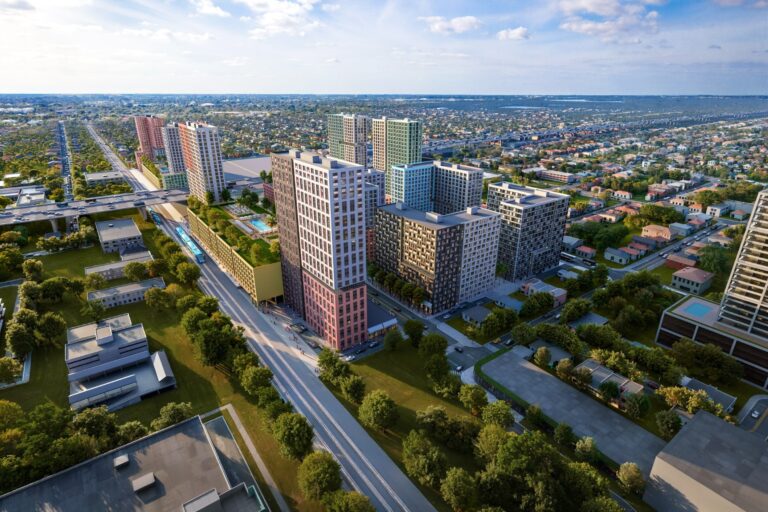
As the “City of Yes” initiative rewrites the zoning map, a new era of Adaptive reuse rendering has emerged. The developers winning bids in 2026 aren’t just showing floor plans; they are showing “Light Cuts,” “Dark Luxury” amenities, and verified zoning views that prove viability before a hammer swings.
At SolidRender, we understand that in New York, you aren’t just selling an apartment; you are selling a solution to a geometry problem. Here is how top NYC developers are using high-end visualization to turn distressed office assets into trophy residential properties.
Key Takeaways for 2026:
The “Light Well” Challenge: How to render cut-outs and atriums to prove natural light compliance in deep buildings.
Zoning Visualization: Using “Verified Views” to speed up city council approvals under new “City of Yes” rules.
The Amenity War: Visualizing vaults and basements as luxury speakeasies or spas (the “Dark Luxury” trend).
Investor Confidence: Selling the “After” vision of a gutted shell before demolition begins.
The “Deep Floor Plate” Problem: Visualizing Light Wells & Atriums
The defining characteristic of 1970s Manhattan office towers is the “Deep Floor Plate” massive, block-wide floors that are great for cubicles but illegal for living. Residential code requires every habitable room to have a window. This makes Office to residential conversion a geometry puzzle.
Developers are solving this by carving “Light Cuts” or inner courtyards into the building’s core. But explaining this to an investor is difficult. A 2D blueprint just looks like you are deleting rentable square footage.
The “Vertical Village” Visualization
We use 3D visualization to show why the cut is necessary. We don’t just render the hole; we render the light.
The “Donut” Cut: We visualize how removing the center core turns a dark 30,000 sq ft floor into a bright, airy “donut” of luxury units.
Light Penetration Studies: We create heat-map renders that show exactly how far natural sunlight penetrates into the unit at 10:00 AM, 12:00 PM, and 4:00 PM. This proves to the BSA that your units meet the legal “Light and Air” requirements.
Pro Tip: When pitching a conversion, use a “Before/After” Slider. Show the “Before” as a dimly lit office floor with fluorescent lights. Show the “After” with the core removed, filled with a lush private garden that floods the interior units with soft, natural daylight.
Zoning Visualization: Winning BSA Approval with Verified Views
With the “City of Yes” updates allowing buildings built before 1991 to convert, the floodgates have opened. But community boards are still skeptical. They fear density, shadows, and blocked views.
This is where Zoning visualization NYC becomes your most valuable legal tool. You cannot rely on artistic interpretation; you need legal accuracy.
The “Verified View” (AVR)
SolidRender creates “Verified Views” (Accurate Visual Representations) that stand up in court.
The Process: We take a high-resolution photograph of the existing streetscape. Then, using surveyor data, we legally superimpose your proposed conversion into the photo with 100% geometric accuracy.
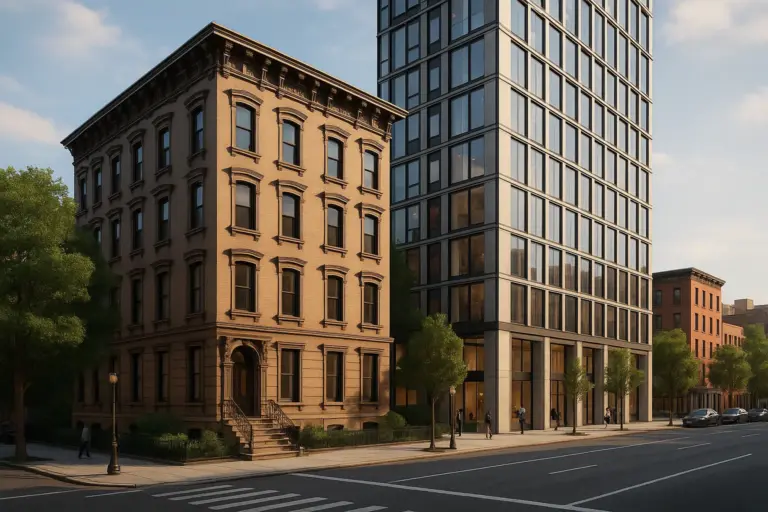
The Result: You can prove to the city council that your new rooftop addition won’t cast a shadow on the park across the street. We strip away the “fear of the unknown” and replace it with photographic proof.
From Vault to VIP: Luxury Amenity Rendering for Windowless Spaces
What do you do with the windowless basement, the bank vault, or the mechanical core? In 2026, you don’t use it for storage. You use it for “Dark Luxury.”
One of the hottest NYC Real Estate Trends is turning these lightless spaces into moody, high-end amenities that actually benefit from being underground.
The “Speakeasy” Concept
We are seeing a massive demand for Luxury amenity rendering that focuses on mood rather than views.
The Vault Spa: We visualize old bank vaults turned into soundproof thermal spas or cryotherapy chambers. The thick walls become a selling point for privacy.
The Listening Bar: We render windowless basements as Tokyo-style “Hi-Fi Listening Bars” spaces designed for audiophiles with warm ambient lighting, velvet textures, and no outside distractions.
Why this works: It turns your project’s biggest liability (dead space) into its most exclusive asset.
Adaptive Reuse Rendering: Selling the “After” Vision to Investors
The hardest part of Adaptive reuse rendering is the “Gut Phase.” When you walk an investor through a stripped-out office floor, it looks like a disaster zone, wires hanging, concrete exposed, and debris everywhere.
It is hard to get a $50 million check when the building looks like a ruin.
The “Virtual Model Unit”
Instead of building a physical model unit (which costs $200k+ and takes months), we build a Digital Twin.
The “White Box” Overlay: We take a photo of the raw, gutted industrial space. We then overlay a semi-transparent render of the finished “Loft Apartment.”
The Effect: The investor sees the raw potential (high ceilings, concrete columns) and the finished value (Italian kitchens, oak floors) simultaneously. This “Augmented Reality” style of static rendering is closing deals faster than any brochure.
Conclusion: Don’t Let Your Conversion Die in Committee
The Office to residential conversion boom is the biggest opportunity in NYC real estate trends in decades. But it is also the most technically complex.
In 2026, the developers who win aren’t the ones with the best architects; they are the ones who can visualize the impossible. They use rendering to prove that a dark office can become a bright home, that a basement can become a sanctuary, and that a conversion is a safer bet than new construction.
Ready to visualize your conversion? Don’t let deep floor plates scare off your investors. Contact SolidRender for 3D rendering services in New York and turn your vacant office into the city’s next trophy address.